Citizen Briefing: Data Centers and Large Energy Projects in Southern Indiana
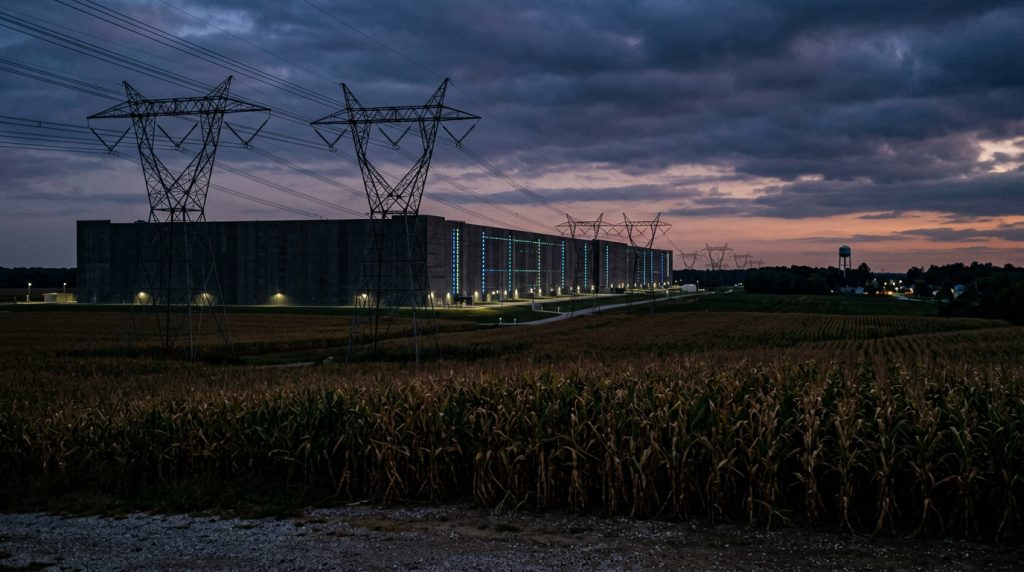
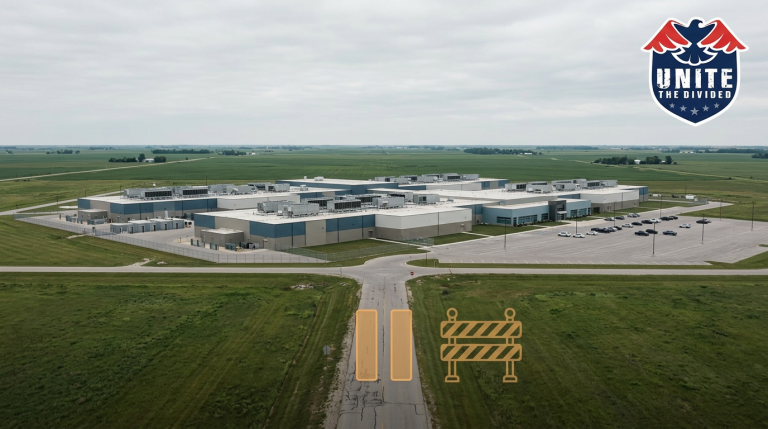
Indiana currently has roughly 46 tracked data-center projects with announced investment exceeding $28 billion. Major examples include Amazon’s $11 billion project in New Carlisle, Meta’s $10.8 billion across two sites, Google’s $2 billion project in Fort Wayne, and Sabey’s $4 billion project in Decatur Township. Source
In Southern Indiana, Meta’s $800 million campus at the River Ridge Commerce Center in Jeffersonville is projected to support approximately 100 operational jobs. Source
Microsoft’s La Porte project is listed at $1 billion with up to 200 jobs by the end of 2032. Source
These projects require large amounts of electricity and, in many cases, significant water. They frequently request tax incentives, special zoning, and infrastructure support.
Why this matters to people who live here
When a new industrial user that draws power on the scale of a small city is added to the system, the costs and risks are either paid by the company or shifted onto existing ratepayers and taxpayers. Residents need clear answers on who pays for new generation, how many permanent local jobs are created relative to the public cost, and what happens to water resources and the site if the project under-performs or is abandoned.
What supporters usually say
- The projects will bring construction jobs and some permanent technical positions.
- They will expand the local tax base.
- They support national competitiveness in artificial intelligence and cloud computing.
- Modern designs can reduce water use compared with older facilities.
What residents should demand before any incentive or zoning vote
- Will the project be required to pay 100 percent of its power costs and 100 percent of all new infrastructure through a customer-specific contract of the kind AES Indiana filed for Google’s Monrovia project under Indiana HEA 1007? Source for the Monrovia precedent
- What is the projected number of permanent, full-time local jobs after construction ends, and how does that number compare with the total public investment and tax abatements? (Example: Meta’s $800 million Jeffersonville campus is associated with roughly 100 operational jobs.)
- What independent analysis, not produced by the developer or the economic-development office, shows the net fiscal return to the city and county after all incentives and public costs are subtracted?
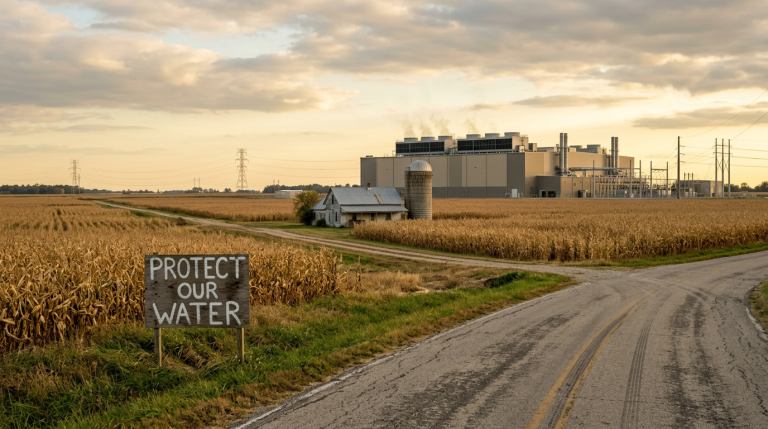
- What binding limits will be placed on water withdrawal, and what monitoring data will be made public?
- Will the full incentive agreement, including any claw-back provisions if jobs or investment targets are missed, be made public before the vote?
- If the facility is later abandoned or never fully used, who pays for site remediation and removal of equipment? Will a performance bond be required?
A practical standard that protects the community
Do not accept less than the Google-Monrovia standard already secured in Indiana: the company pays 100 percent of its power costs and 100 percent of new infrastructure under a customer-specific contract with a minimum 15-year term. Tax incentives should not exceed what ordinary local businesses receive. Noise, water, and abandonment risks should be addressed with clear, enforceable conditions and performance bonds.
Citizen pressure has already produced results in Indiana. Google withdrew its 467-acre rezoning petition in the Indianapolis area in September 2025 after community opposition over water, noise, and energy concerns. Proposals in Ellettsville and Merom were also withdrawn. Source
Bottom line for Southern Indiana
These projects can be structured to protect ratepayers and the local tax base, or they can be structured to extract value while leaving costs behind. The difference is determined by the conditions local officials attach before any approval. Citizens have both the right and the demonstrated ability to insist on those conditions.
Where to raise these questions
- Public comment periods at city council and county commissioner meetings
- Formal comment windows at the Indiana Utility Regulatory Commission on relevant filings
- Direct written questions to the mayor, council members, county commissioners, and state legislators who represent the affected area
Do you work with or around this issue? Know something the community should? Send us a tip, confidentially. We verify everything before we publish, and we never reveal who told us.