From Mellencamp’s Stage to Main Street: Why Community Engagement, Transparency, and Civic Duty Must Replace Reliance on Government in Southern Indiana
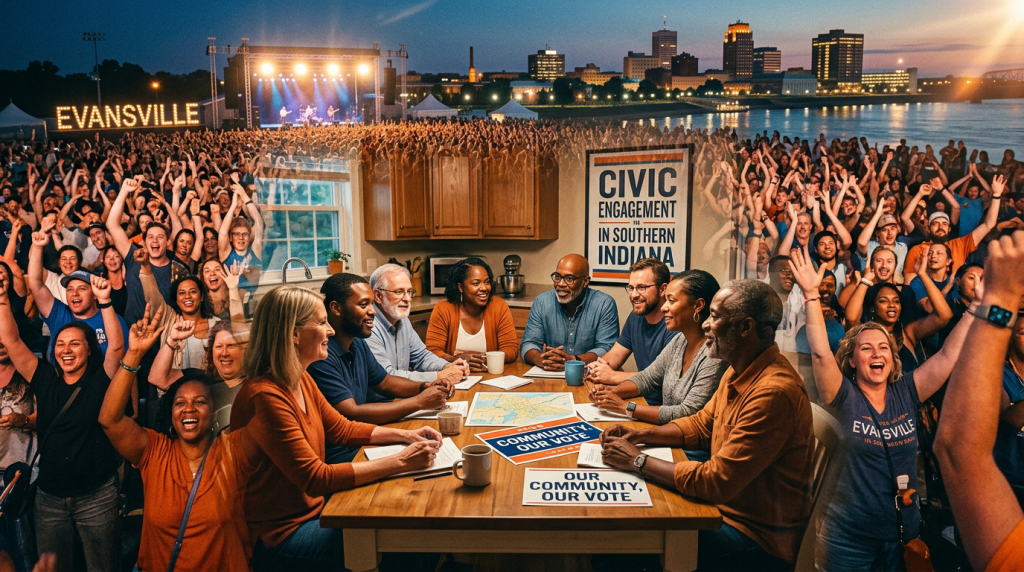
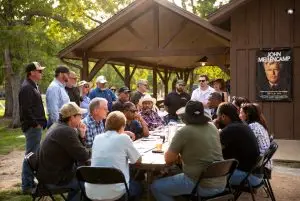
I went to a John Mellencamp FREE concert at the Ford Center in Evansville Indiana last night and it got me thinking. “Cougar” was critical of ICE at the beginning of the show which had many people grumbling in my section but then he spoke more broadly about not trusting government of any kind. The Authority Song is one of my favorites and overall I thought the concert was one of the best I have ever seen. I can disagree with John (ICE) but still listen to him and enjoy him. I wish he would have an open conversation about his ICE position but I digress.
That moment at the Ford Center stayed with me through this morning, which is why I asked Grok to help me write this Pulitzer Prize winning article, for Suno to help me write a hit song and for PixelCut AI to help me create the art.
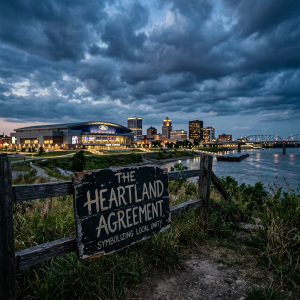
To bring the message home even more powerfully, I created two original songs that capture the heart of what we must do right here in Southern Indiana. The official theme song for this piece is “The Heartland Agreement”, a raw, anthemic call to local ownership and unity. You can listen to it here: https://suno.com/s/BQM4aaZ0YrukB6Vi
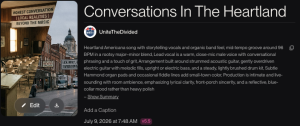
The companion track, “Conversations In The Heartland”, focuses on the power of neighbor-to-neighbor dialogue and the honest conversations we need to have about tough issues like immigration enforcement and government accountability. Listen to it here: https://suno.com/s/SfPelpzRnXRYgXwX
Mellencamp, a voice of the heartland, captured something real: skepticism toward unchecked authority. His specific jab at Immigration and Customs Enforcement sparked grumbling in my section not because of blind allegiance but because many of us see the real-world effects of those policies right here at home. The larger truth he touched on, however, is the one we must confront together: we can no longer afford to rely on government institutions, local or federal, to solve our problems for us.
This is why the national debate over mass migration matters at the local level, all the way down to Evansville and Southern Indiana. It is not about waiting for officials in distant offices or even City Hall to fix everything. It is about each of us stepping up with ownership, transparency, and civic duty. When federal policies result in large numbers of entrants with limited vetting and assimilation incentives, the consequences land directly on our streets, schools, workplaces, and neighborhoods. The solution begins when neighbors talk to neighbors, demand accountability, and take responsibility instead of deferring to institutions that too often operate without full transparency.
Consider the numbers that drive this reality. U.S. Customs and Border Protection recorded more than 2 million encounters at the southern border in fiscal years 2022 and 2023 alone, following shifts that included the suspension of Remain in Mexico protocols, expanded humanitarian parole programs, and widespread release practices. These are not statistics confined to the border. Secondary migration patterns send individuals and families northward, including to the Midwest. In Indiana, communities like Evansville have absorbed increases in service demands without corresponding local preparation or open accounting of costs.
Locally, the impacts are tangible and demand honest discussion. Employers in manufacturing and agriculture in Southern Indiana face labor shifts that affect longtime residents. Housing inventories tighten in Evansville’s affordable neighborhoods. School districts report surges in English-language learners, stretching resources. Hospitals and social services feel added pressure. These are daily realities for families who have built lives here, and they require transparency from every level of government plus direct civic engagement from us.
The human element cuts deeper and cannot be outsourced to institutions. Many entrants come seeking opportunity, and some integrate successfully. Yet patterns emerge: slower English acquisition and cultural adaptation among certain large cohorts, higher welfare utilization rates in some households, and pockets of attitudes that resist core American norms. In Evansville, where community events, church gatherings, and high school sports still knit people together, these shifts test social cohesion. Families here share stories of working alongside newcomers who show open resentment toward established residents or little interest in adopting local customs. These observations are real. They must be met with neighbor-to-neighbor conversations, not left to officials who may lack full transparency or accountability.
This is not about hatred of individuals. It is about policy outcomes that affect our shared home and the urgent need for local ownership. The 1965 Immigration and Nationality Act set the stage for chain migration that continues today. Executive actions and federally funded networks amplified those effects. The result is a system that too often leaves heartland towns to manage consequences without clear accounting or local voice. We cannot keep handing these issues to institutions. We must engage each other.
Southern Indiana exemplifies why community engagement and civic duty are essential. Evansville sits far from the border, yet we live with the results. The path forward is not waiting for others. It is Evansville residents showing up at city council meetings, school board sessions, and neighborhood gatherings. It is organizing respectful, transparent conversations about fair enforcement, measured legal immigration, and practical assimilation support. It is churches, businesses, and civic groups taking ownership of welcoming those who genuinely want to join our way of life while protecting the stability we have built. Transparency and accountability begin when we demand them locally and refuse to outsource our responsibility.
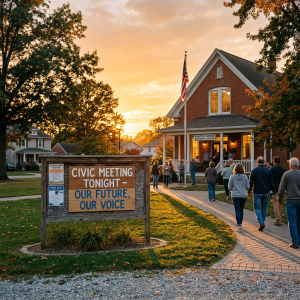
Unity does not require agreement on every detail. It requires each of us exercising civic duty right where we live. Disagreement on specific enforcement is fine. What unites us is the shared commitment to secure communities, fair rules, and a Southern Indiana that remains a place where families thrive across generations through our own collective action.
At unite thedivided.com and the EVAN platform, the mission remains clear: bridge divides through facts, local stories, and personal responsibility. The Mellencamp concert at the Ford Center reminded me that art can spark reflection, and the two new songs I created using Suno.AI —“The Heartland Agreement” and “Conversations In The Heartland”—carry that spirit forward. Real change, however, comes when citizens in Evansville and across Southern Indiana decide to own the solutions. This is our home. This is our duty.t the Ford Center reminded me that art can spark reflection. Real change, however, comes when citizens in Evansville and across Southern Indiana decide to own the solutions. This is our home. This is our duty.