Flock Cameras, Surveillance, and Your Right to Know
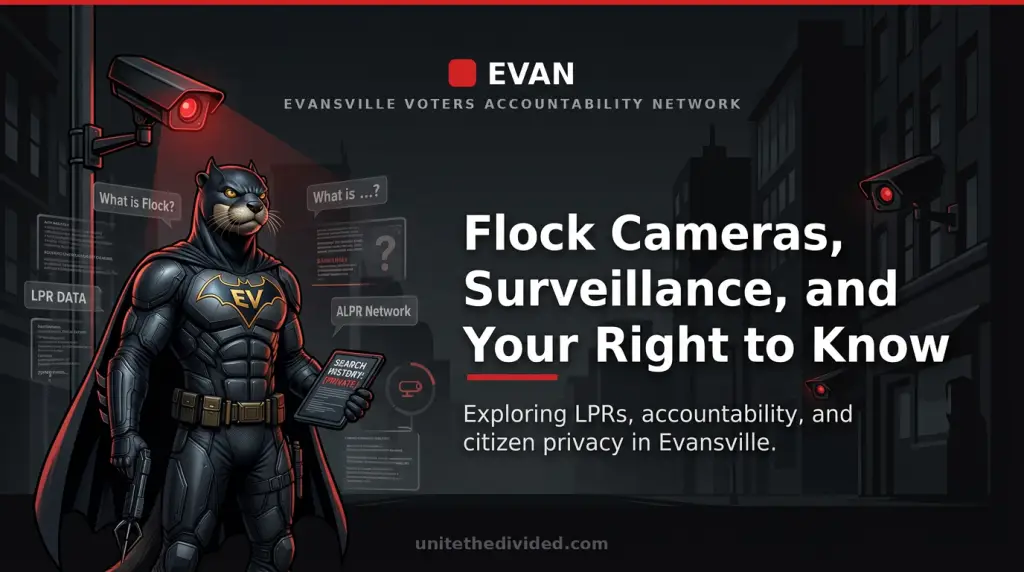
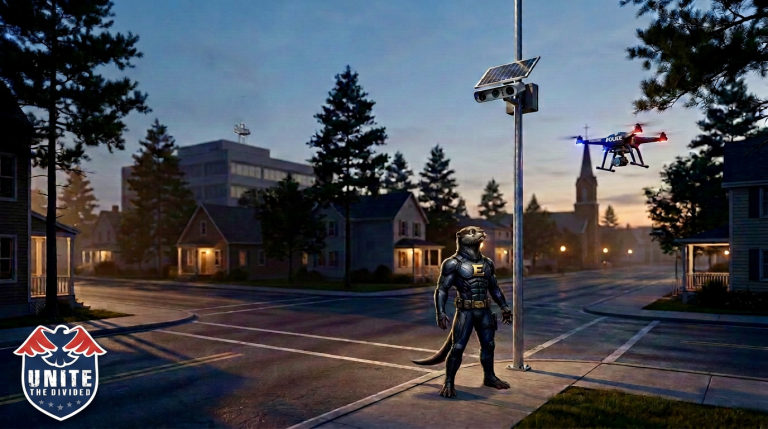
Automated license plate readers, most made by a company called Flock Safety, are cameras that photograph vehicles, log their plates, and record where and when each car was seen. Police agencies across the country, including many in Indiana, use them to look for stolen cars and suspects. They are also, increasingly, a subject of serious debate, because the same system that finds a stolen truck also builds a searchable record of where ordinary people drive.
This is not a left or right issue. You can strongly support the police and still believe a network that tracks every car’s movements deserves public debate, clear rules, and honest answers. That middle ground, support for safety plus insistence on accountability, is where most people actually live.
Why this is in the news
The national conversation grew sharper recently when Flock’s CEO, Garrett Langley, called DeFlock, a volunteer group that maps the public locations of these cameras, a “terroristic organization.” To be precise, he did not call every curious resident a terrorist. He aimed that word at the activists who publish camera locations. But civil liberties groups, and even several police chiefs, pushed back, pointing out that residents asking where public surveillance sits and how it is used is not extremism. It is, as one chief put it, democracy in action.
There is also a documented trust problem. Public records obtained in Dunwoody, Georgia showed Flock sales staff had accessed live and recorded camera feeds hundreds of times, which contradicted the company’s own public statement that no one at Flock accesses customer footage. Whatever the intent, the pledge and the record did not match. That is exactly the kind of gap transparency exists to catch.
Both sides, fairly
Supporters say these cameras recover stolen vehicles, find missing people, and solve crimes, and that publishing camera locations helps criminals evade them. Critics say residents never voted for a movement-tracking network, and they raise fair questions about who can search the data, how long it is kept, and whether it can be misused. Both concerns can be true at once. The answer is not to pick a tribe. It is to get the facts.
What we are asking here
If your city or county uses this technology, you have the right to know:
- Did our elected officials publicly vote to adopt it, and where is that on the record?
- How many cameras are there, and where?
- Who can search the data, and what prevents misuse?
- How long is the data kept, and who else can access it?
- Is there an audit log, and has anyone reviewed it?
What you can do
These are answerable questions, and Indiana law gives you the tools to get them. File a public records request for your local agency’s camera policy, contract, and access logs. Our records request guide shows you how, and our accountability guide covers the deadlines they must meet. Ask these questions at a public meeting, on the record, using our guide to speaking up. Then tell us what you find, with the documents attached, so the whole community can see it.
We are not here to tell you surveillance is good or bad. We are here to make sure the decision gets made in the open, with your voice in the room. That is the standard, whatever the answer turns out to be.