Grown Right Here: Why Southern Indiana Can Feed Itself
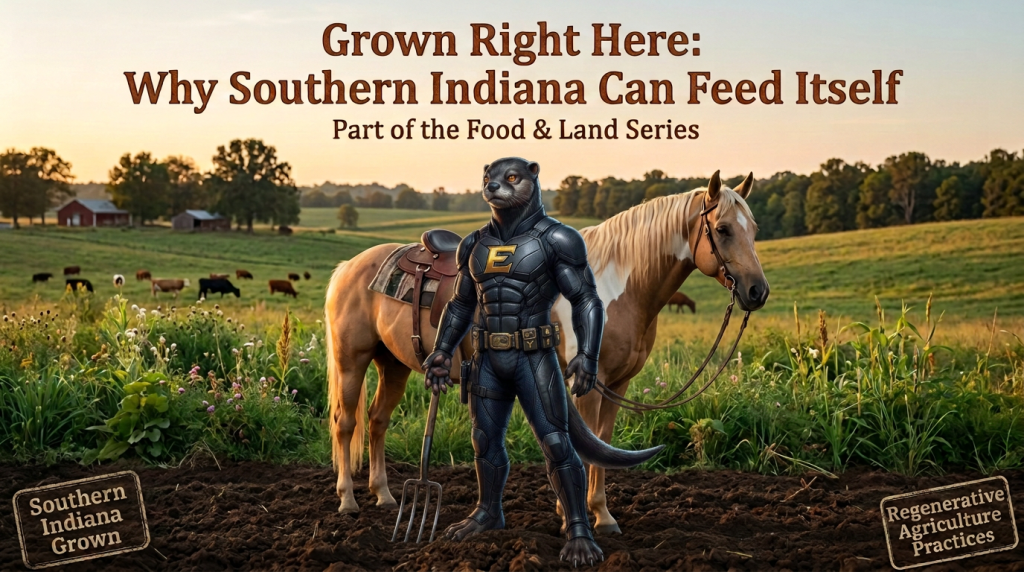
Drive ten minutes in almost any direction from Evansville and you are surrounded by some of the richest farmland in the country. Southern Indiana is farm country, and always has been. We have the soil, the water, the growing season, and generations of people who know how to work the land. By any honest measure, we have more than enough to feed the people who live here, and to feed them well.
So here is a fair question worth sitting with: why does so much of the food on our shelves travel a thousand miles or more to get here, while good land and good farmers sit right down the road?
What regenerative farming actually means
You may have heard the term “regenerative farming” and wondered if it is just a buzzword. It is not. At its core it is a practical, common-sense idea: farm in a way that leaves the soil healthier than you found it, instead of slowly wearing it out. That means practices like keeping living roots in the ground with cover crops, rotating what grows where, grazing animals in ways that feed the soil, and leaning less on heavy chemical inputs. Healthier soil holds more water, resists drought and flooding better, and grows more nutritious food. It is, in a lot of ways, a return to how farming worked before we forgot some of it. Plenty of Southern Indiana farmers are already doing versions of this, quietly and well.
The people already doing it
This is not a someday idea. Right here we have family farms, small ranchers, orchards, market gardeners, farmers markets, and food co-ops, people growing real food and selling it close to home. When you buy from them, three good things happen at once: your food is fresher and you know where it came from, your money stays in the local economy instead of leaving the region, and a local farm family gets to keep doing what they do. That is a rare win where everybody comes out ahead.
Why local food is also resilience
The last few years taught a lot of us how fragile long supply chains can be. When a store shelf empties, distance is the enemy. A community that grows a meaningful share of its own food is simply harder to knock off balance. Local food is not only about taste and freshness, though it delivers both. It is about a community that can take care of itself. That is strength, and it is the opposite of dependence.
What you can do
- Shop a local farmers market this month, and get to know one grower.
- Join a CSA or a food co-op, where you buy a share of a local farm’s harvest.
- Ask where your food comes from, at the store and at restaurants. Demand shapes supply.
- If you have a yard, grow one thing. A single raised bed is a start.
- Support the farmers you already know, and tell your neighbors about them.
Where we come in
This is not a left or right issue, and we are not going to make it one. Everybody eats. Everybody benefits from fresher food, healthier land, and a stronger local economy. Our part is simple: we will spotlight the farmers, markets, and co-ops doing good work here, share practical guides for eating closer to home, and help connect neighbors to the real food growing all around them.
So tell us: who is your favorite local farm, market, or co-op? Who should we feature next? This is a community project, and it starts with the people already growing it.