Energy Costs and the Affordability Crisis, Who Sets Your Rates, and Why They Keep Rising
Almost nothing hits a household budget as directly and as universally as the utility bill. Electricity and gas are not optional, so when rates climb, everyone feels it, and the people with the least room in their budget feel it most. Behind every increase is a process most residents never see: how rates get set, who approves them, and what is actually driving the cost. Those are answerable questions, and for a lot of families right now, they are urgent ones.
This is not a left or right issue. Wanting energy that is reliable, and bills that are fair and affordable, is something nearly everyone agrees on. You can support a well-run utility and still demand transparency about why your bill keeps rising. That is exactly the standard EVAN is built to hold.
Why this matters here
Most people get their power from a single utility they cannot shop around, which makes the rules that govern that utility especially important. In Indiana, utility rates are not set by the company alone. They are reviewed and approved by a state regulator, the Indiana Utility Regulatory Commission, in proceedings called rate cases, and a separate state office, the Office of Utility Consumer Counselor, is supposed to represent ratepayers in those cases. The catch is that these proceedings are open to the public but rarely watched by the public, which means decisions that shape your bill for years often happen with very few residents paying attention.
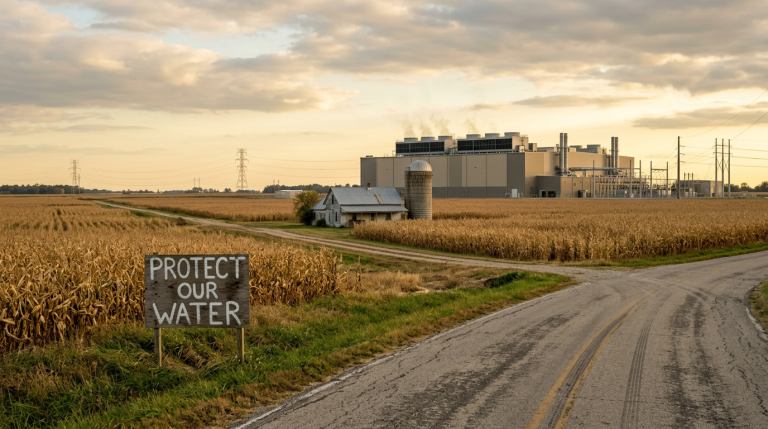
One growing pressure on the whole system is surging electricity demand, including from large new users like data centers. When the grid has to expand to serve big new customers, a fair and pointed question follows: who pays for that expansion, the large new user, or existing households on their monthly bills? That single question connects a lot of local issues, and it is exactly the kind of thing worth watching closely.
Both sides, fairly
Utilities make real arguments: the grid is expensive to maintain and modernize, fuel and equipment costs rise, reliability requires investment, and serving growing demand takes new infrastructure. Those are legitimate costs. Critics raise legitimate concerns too: rate increases that outpace inflation and wages, fixed monthly charges that hit low-use and low-income households hardest, the cost of serving big industrial customers being spread onto residential bills, shareholder profits and executive pay built into the rate base, and disconnections for families who simply cannot keep up. Reasonable people can weigh these differently. The way to sort it out is not to guess. It is to look at the actual rate case and the actual numbers.
What we are asking here
On energy costs, residents have the right to know:
- Who sets our rates, and when is the next rate case where the public can comment?
- What is actually driving recent increases, in plain terms?
- Are large new users, like data centers or big industrial customers, paying their full share, or is cost shifting onto households?
- How much of the bill is fixed charges versus actual usage, and how does that affect low-income families?
- What assistance programs exist for people struggling to pay, and how do you access them?
- How do our rates compare to neighboring communities?
What you can do
You have more standing here than most people realize. Rate cases have public comment periods, and regulators are required to consider public input. Watch for rate case filings, and submit a comment when one is open. File a public records request for relevant filings and local agreements, our records request guide shows you how, and the accountability guide covers the deadlines. Bring your questions to local officials and public meetings using our guide to speaking up. And if you are struggling with your bill, ask your utility and local agencies about assistance programs, then tell us what you learn so we can share it with neighbors in the same spot.
We are not here to say your utility is the villain or the hero. We are here to pull the process into the open, so families can see what is driving their bills, weigh in where the law gives them a voice, and get help when they need it. Affordable, reliable, and transparent are not too much to ask.
Related
See also: Data Centers, Their Footprint, and Your Right to the Numbers, and explore every local issue on our What We’re Watching hub.