Data Centers, Their Footprint, and Your Right to the Numbers
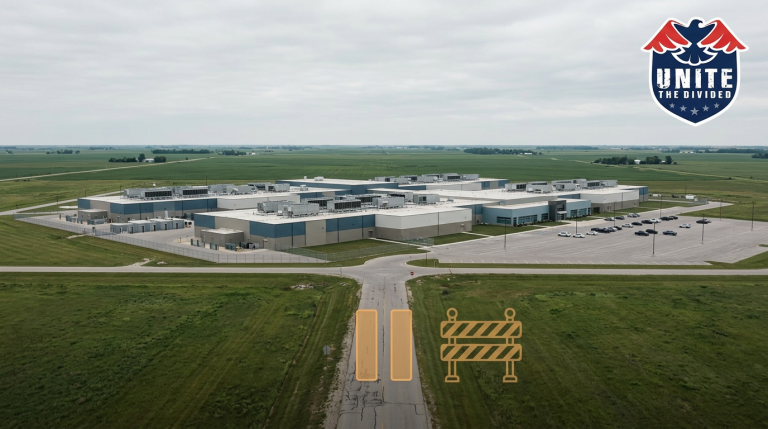
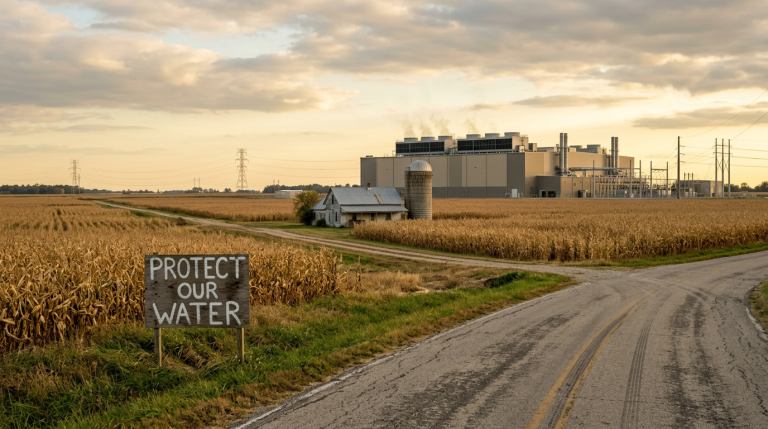
Data centers are the giant warehouses of computers that power the internet, cloud storage, and the current boom in artificial intelligence. As AI demand explodes, companies are racing to build them across the country, and communities like ours are increasingly being asked to host them. When one comes to town, it usually arrives with big promises: investment, jobs, and a bigger tax base. It also arrives with big footprints, on the power grid, the water supply, and often the tax rolls. Those tradeoffs deserve a clear-eyed public conversation before the deal is done, not after.
This is not a left or right issue. Wanting local investment and wanting to know what it actually costs are not opposites. You can welcome new business and still insist on seeing the numbers. That is exactly the standard EVAN exists to hold.
Why this matters here
Data centers are unusually resource-hungry. A single large facility can use as much electricity as thousands of homes, and many use large amounts of water for cooling. That raises fair, concrete questions for residents: who pays to expand the power and water capacity these facilities need, and could that cost land on your utility bill? Many data center projects also seek tax abatements or other incentives, which can mean the promised new tax revenue is smaller, or slower to arrive, than the headline suggests. None of this makes a data center good or bad. It makes it something worth examining line by line.
Both sides, fairly
Supporters point to real benefits: construction jobs, long-term investment, a stronger commercial tax base, and being part of the digital infrastructure the economy now runs on. Critics raise real concerns: strain on the electrical grid and water supply, the possibility that infrastructure costs get passed to ratepayers, tax incentives that shift the burden onto existing residents and businesses, noise and land use near neighborhoods, and the fact that these facilities often create relatively few permanent jobs once built. Both of these can be true at the same time. The point is not to cheer or to fight. It is to get the specifics and weigh them honestly.
What we are asking here
If a data center is proposed in our area, residents have the right to know:
- What tax abatements or incentives are on the table, and what do they cost the public over their full term?
- How much electricity and water will it use, and who pays to expand that capacity?
- Could this affect residential utility rates, and has anyone modeled that?
- How many permanent local jobs will it actually create, and at what wages?
- What binding commitments has the company made, in writing, and what happens if it does not keep them?
- Where and when was there public input before the vote?
What you can do
These decisions are made close to home, in council meetings, zoning boards, and redevelopment commissions, which means your voice can reach them. Watch the agendas for those bodies. File a public records request for any proposed incentive agreement, utility study, or staff report. Our records request guide shows you how, and the accountability guide covers the deadlines they must meet. Show up and ask these questions on the record using our guide to speaking at a meeting. Then send us what you find, with the documents attached, so the whole community can see the real numbers.
We are not here to say data centers are good or bad for Southern Indiana. We are here to make sure the decision is made in the open, with the full costs and benefits on the table, and with your voice in the room.