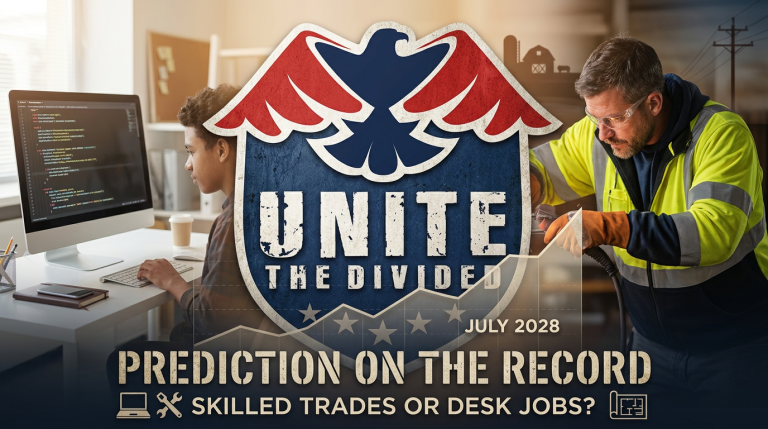
Is College Relevant? For Whom?

It is the question sitting on kitchen tables all over Southern Indiana, usually unspoken, right next to the college brochures: is this actually worth it? For decades the answer was assumed. Good kids go to college. Full stop. Questioning it felt almost rude. But parents can feel that something has shifted, and they are right. So let us do what we do here: skip the slogans on both sides and look at what is actually true. The honest answer is that college is still very much worth it for some students, a genuinely bad deal for others, and the real problem is that our schools push everyone down one path as if those differences do not exist.
The case for college, honestly stated
Let us start with what the college skeptics tend to skip, because we deal in the whole truth here. The earnings advantage of a bachelor’s degree is real and large. Federal data consistently shows that workers with a bachelor’s degree earn roughly 60 to 80 percent more than workers with only a high school diploma. In recent years the median college graduate earned about $80,000 a year, compared to about $47,000 for the median high school graduate. Over a lifetime, that gap compounds into more than a million dollars. College graduates are also about half as likely to be unemployed, and far less likely to live in poverty. Economists at the New York Federal Reserve recently estimated the return on a college degree at about 12.5 percent per year, which beats almost any investment you can name.
So anyone telling you college is a scam, flat out, is not telling you the truth. For many students, it remains one of the best financial decisions available.
The case against, honestly stated
Now the part the college-for-all crowd skips. Those numbers above are averages and medians, and averages hide people. The same New York Fed economists found that for roughly a quarter of college graduates, the degree does not pay off. Think about that: for about one in four kids who finish, the math never works. The major matters enormously, an engineering graduate and a communications graduate are living in different economies. The cost has exploded, with the total cost of a four-year degree now around $180,000 when you count what a student could have been earning instead. And the most sobering number of all: about 40 percent of students who start a bachelor’s degree have not finished it six years later. Many of them carry the debt anyway, with no degree to show for it. Workers with some college but no degree earn barely more than high school graduates, around $90 more a week, often while making loan payments. That is the quiet catastrophe nobody puts in a brochure.
Meanwhile, the path nobody mentioned
While guidance offices kept pointing everyone toward campus, something remarkable happened in the trades. The country is short hundreds of thousands of skilled workers, with estimates around 439,000 unfilled positions and rising as older tradesmen retire faster than young people replace them. Electricians now earn a median of over $62,000, plumbers about $63,000, and the top ten percent in both fields clear six figures. Apprentices earn while they learn instead of borrowing while they study, and typically graduate into the workforce with zero student debt. Compare the paths honestly: a journeyman electrician at $62,000 with no debt, versus a new bachelor’s graduate at a similar starting salary carrying an average of around $39,000 in loans.
And here is the twist almost nobody saw coming: the AI boom, the thing everyone fears will take jobs, is creating a hiring surge in the trades. Data centers cannot be built or maintained by software. Demand for electricians, welders, and HVAC technicians has jumped sharply in the last three years, and there are already young electricians, under 30, no degree, earning over $200,000 a year building data centers. The work that requires skilled human hands in the physical world is proving to be some of the most AI-resistant work in the whole economy.
So, for whom?
Here is the honest framework, the one we wish every guidance office would post on the wall. College is likely worth it if the student knows what they want to study, the field actually requires the degree (engineering, nursing, accounting, medicine, law), the total debt stays well below the expected first-year salary, and the student is genuinely likely to finish. College is likely a bad deal if the student is going because it is simply what you do next, has no idea what to study, would need heavy debt to attend, or is at real risk of becoming one of the 40 percent who start and never finish. And the trades deserve a first look, not a fallback glance, for any young person who likes working with their hands, wants to earn now rather than borrow now, and wants work that AI is more likely to assist than replace.
The real problem is the assembly line
Our quarrel is not with college. It is with a system that runs every kid down the same conveyor belt toward one destination, without honest numbers, without showing the alternatives, and without asking who each kid actually is. A seventeen-year-old deserves the whole truth: what each path costs, what each path pays, the odds of finishing, and the full menu of options, including the ones with tool belts. Some kids belong in lecture halls. Some belong in apprenticeships. Some belong in both, at different times. Telling all of them the same thing is not guidance. It is negligence with good intentions.
What you can do
If you have a student at home, run the real numbers together: the true cost of each school, the realistic salary of the intended major, and what the monthly loan payment would actually be. Ask the school what it offers besides the college track, and if the answer is thin, ask why. Visit a trade program or union apprenticeship alongside the campus tours, and let your kid see both worlds before choosing. And tell us what you find, because this is exactly the conversation Southern Indiana families should be having out loud, together, instead of alone at the kitchen table.
This is the first piece in Future Proof, where we ask what is worth learning, which paths actually pay off, and how our kids stay valuable in an economy being reshaped by AI. No slogans, no assembly lines, just the whole truth and every option on the table.