Police Drones, Eyes in the Sky and the Rules That Should Come With Them
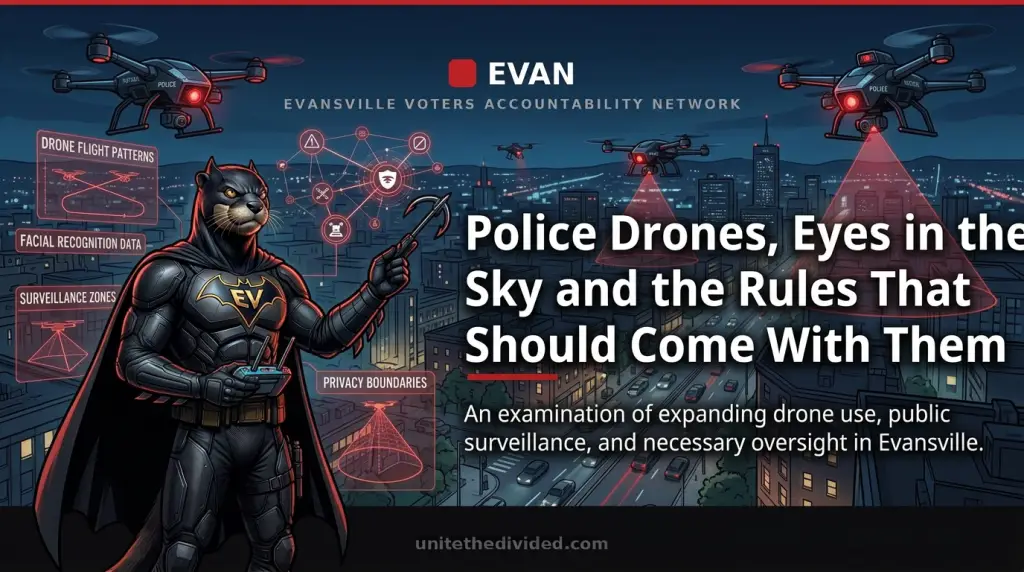
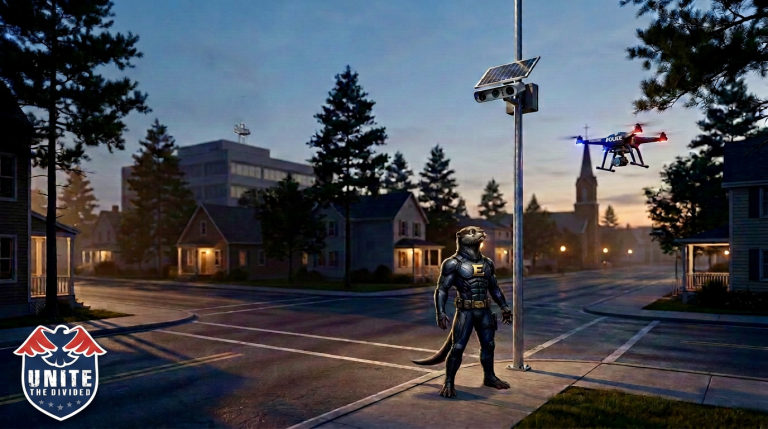
Law enforcement agencies are increasingly using drones, small unmanned aircraft with cameras, for everything from searching for missing people to surveying accident scenes to responding to 911 calls. The newest approach, often called Drone as First Responder, sends a drone to a scene before officers arrive. Used well, drones can protect officers, find lost children faster, and reduce dangerous chases. Used without clear rules, an eye in the sky that can watch anyone raises real questions about privacy and accountability. Both things are true, which is exactly why the rules matter.
This is not a left or right issue. You can respect the police and the hard job they do and still want clear limits on aerial surveillance. Support for public safety and insistence on accountability are not opposites. They are how a healthy community gets both.
Why this matters here
Drones are powerful and getting cheaper, so more agencies can afford them, often purchased with grants rather than a public budget vote that residents would notice. The technology can carry high-resolution cameras, zoom, night vision, and sometimes the ability to record continuously. The core questions are not about whether police should ever use drones. They are about the guardrails: when a drone can be launched, what it can record, how long that footage is kept, who can see it, and whether any of it can be combined with other surveillance to track a person over time. Those are answerable questions, and the answers should be public.
Both sides, fairly
Supporters point to genuine benefits: faster response to emergencies, safer outcomes by scouting a scene before officers arrive, quicker searches for missing or endangered people, and better documentation of accidents and disasters. Critics raise genuine concerns: warrantless aerial surveillance, mission creep from emergencies into everyday monitoring, recordings of people who are not suspected of anything, unclear retention and data-sharing rules, and programs adopted with little public debate. Reasonable people can weigh these differently. The way to settle it is not to pick a side by instinct. It is to see the written policy and judge it in the open.
What we are asking here
If our local agencies use or are considering drones, residents have the right to know:
- Is there a written drone or surveillance policy, and is it public?
- Under what circumstances can a drone be launched, and does it require a warrant or supervisor approval?
- What does it record, how long is that footage kept, and who can access it?
- Can drone footage be combined with license plate readers or other systems to track someone over time?
- How was the program funded, and did elected officials publicly vote to adopt it?
- Who audits its use, and can the public see that audit?
What you can do
These programs are overseen by local officials, which means your questions can reach the people responsible. Watch the agendas for your city council, county officials, and public safety committees. File a public records request for the drone policy, any grant or purchase documents, and usage or audit logs. Our records request guide shows you how, and the accountability guide covers the deadlines they must meet. Ask these questions on the record using our guide to speaking at a meeting. Then tell us what you learn, with the documents attached, so the whole community can see it.
We are not here to say police drones are good or bad. We are here to make sure they come with clear, public rules, adopted in the open, with your voice in the room. Safety and accountability are not a trade. We should have both.